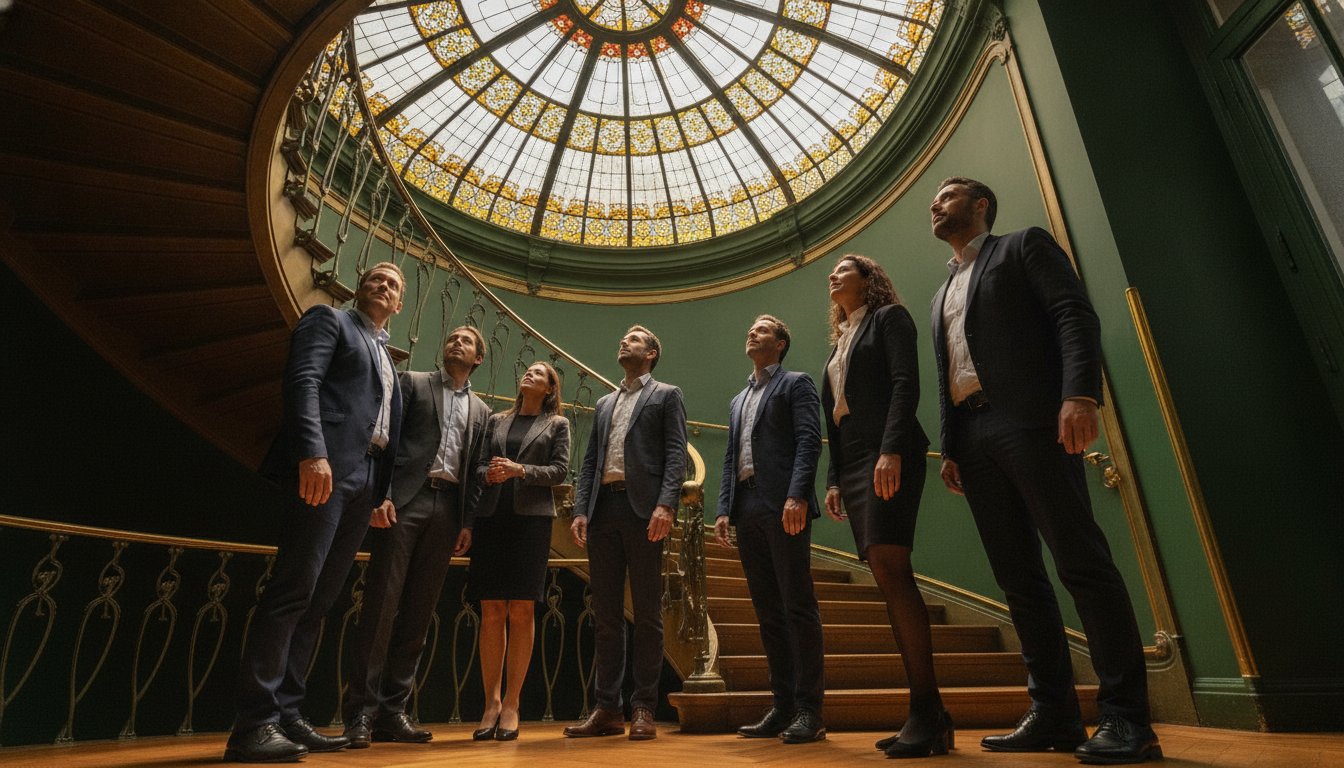
A true architectural masterpiece isn’t just observed; it’s choreographed. In the winding streets of Brussels, the organic curves of Victor Horta and Henry van de Velde demand more than a casual glance. They require a logistical symphony. You understand that orchestrating a premium brussels art nouveau architecture tour involves far more than selecting famous facades. It’s about balancing the delicate requirements of UNESCO-listed interiors with the rigid realities of urban coach restrictions and the pressure of securing timed group entries at the Horta House.
This guide provides the strategic framework you need to transform a standard sightseeing trip into a sophisticated masterclass for 2026. You’ll discover how to navigate the current “Newveau” design revival and leverage the 2026 Art Nouveau Week events to your advantage. We’ll outline a logically sequenced itinerary that handles everything from reliable coach transport to expert local guide selection. By the end of this article, you’ll have a clear blueprint for managing hotel logistics and securing exclusive interior access. We’ll ensure your clients experience the cradle of Art Nouveau with the elegance, precision, and technical mastery it deserves.
Key Takeaways
- Understand the philosophical shift of 1893 and how Victor Horta’s Hôtel Tassel redefined structural space through revolutionary organic forms.
- Distinguish between the fluid ironwork of Horta and the geometric motifs of Paul Hankar to provide a nuanced, expert narrative for your clients.
- Master the logistical complexities of a brussels art nouveau architecture tour by managing capacity constraints and timed entries at exclusive UNESCO sites.
- Learn to curate a “Total Work of Art” experience that connects architecture and interior design with the socio-economic rise of the Belle Époque.
- Discover how professional coordination of private coach fleets and hotel management ensures a seamless journey through historic urban environments.
Brussels: The Philosophical Cradle of Art Nouveau Architecture
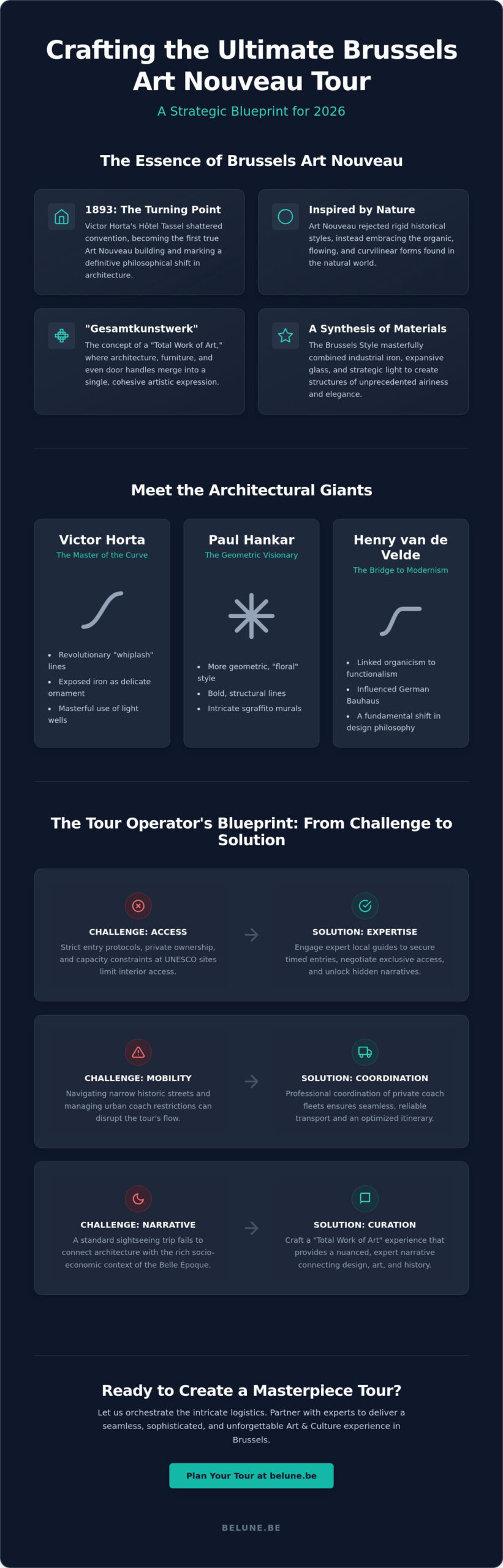
In the late 19th century, Brussels became an experimental laboratory for a new visual language. Art Nouveau emerged not as a mere decorative trend but as a radical rejection of the past. It discarded the rigid rules of Neo-Gothic and Neo-Renaissance styles. Instead, architects turned to the organic flow of nature to redefine structural space. This transformation reached its zenith in 1893. That year, Victor Horta completed the Hôtel Tassel, a building often cited as the first true Art Nouveau residence. This event marked a definitive shift in Brussels: The Philosophical Cradle of Art Nouveau Architecture. The city’s rapid industrialization provided the necessary capital for such boldness. Wealthy patrons, fueled by the Belgian industrial boom, commissioned these avant-garde private residences to reflect their modern, progressive identities. Central to this movement was the concept of the Gesamtkunstwerk. In these spaces, the architecture, furniture, and even the smallest door handle merge into a singular, cohesive expression of art.
The 2026 Perspective on Heritage Preservation
As of 2026, the preservation of this heritage has reached a sophisticated maturity. Brussels’ UNESCO World Heritage sites are no longer just static monuments; they are living testaments to technical mastery. Recent restorations, most notably the Maison Hannon, have revitalized the city’s aesthetic landscape. These projects highlight the meticulous craftsmanship required to maintain such delicate structures. The Brussels Style is a synthesis of iron, glass, and light. For those organizing a brussels art nouveau architecture tour, these restored gems offer a fresh perspective on how heritage can be both preserved and celebrated in a modern urban context.
Beyond the Façade: Why Interior Access Matters
While the exteriors are striking, the true soul of Art Nouveau lies within. Later architectural movements often embraced modular, interchangeable components. In contrast, Art Nouveau celebrates a sense of “wholeness” where every room is a bespoke creation designed for a specific volume. Accessing these interiors remains a complex challenge in 2026. Many masterpieces remain in private hands, while others have transitioned to public museum status with strict entry protocols. Navigating these nuances requires deep expertise. Engaging professional local guide services benelux is essential for uncovering the narratives hidden behind closed doors. These experts bridge the gap between technical architectural theory and the human emotion embedded in the stone. A well-curated brussels art nouveau architecture tour relies on this interior access to reveal the movement’s true depth and artistic intention.
The Architectural Giants: Victor Horta and the Vanguard of the Belle Époque
While Victor Horta remains the undisputed master of the whiplash curve, he wasn’t alone in reshaping the city’s aesthetic identity. The Architectural Giants: Victor Horta introduced a revolutionary use of exposed iron, treating industrial materials with the delicacy of lace. His light wells didn’t just illuminate rooms; they transformed the very atmosphere of the home. In contrast, Paul Hankar pursued a more geometric, “floral” Art Nouveau. His work often featured bold lines and intricate sgraffito, a technique of scratching through layers of colored plaster to create narrative murals. This diversity ensures that a brussels art nouveau architecture tour offers a multifaceted view of the Belle Époque.
Henry van de Velde expanded this vision even further. He acted as the vital bridge between Belgian organicism and the functionalism that would later define the German Bauhaus. This evolution shows that the movement wasn’t just a fleeting style but a fundamental shift in design philosophy. Stained glass and sgraffito weren’t merely decorations. They served as structural storytelling elements that dictated how light and narrative flowed through a space. For the professional tour operator, understanding these nuances is key to delivering a narrative that resonates with sophisticated travelers.
Key UNESCO Sites for Group Itineraries
Three primary locations form the backbone of any high-end itinerary. The Hôtel Solvay represents the pinnacle of luxury and technical innovation. No expense was spared in its construction, making it a definitive “total work of art.” The Hôtel van Eetvelde showcases the “winter garden” concept, where a central glass dome serves as the lungs of the house, drawing light into the core of the building. Finally, the Horta Museum offers an intimate look at the architect’s creative process within his own home and studio, providing a rare glimpse into the mind of a visionary.
The Hidden Gems of Saint-Gilles and Ixelles
Beyond the famous landmarks, districts like Saint-Gilles and Ixelles hide treasures like the Cauchie House. Its facade is a masterpiece of sgraffito, designed by Paul Cauchie to advertise his own artistic services. The Autrique House, Horta’s first major breakthrough, provides a fascinating look at the transition from tradition to innovation. Successfully connecting these scattered sites requires precision. Planning routes through these historic neighborhoods is best achieved with modern coach hire that understands local access restrictions. If you’re looking to elevate your next itinerary, we recommend consulting an expert who can orchestrate these complex cultural experiences with seamless professionalism. This ensures your brussels art nouveau architecture tour remains focused on the art, not the logistics.
Navigating the Logistical Complexity of Art Nouveau Group Itineraries
Organizing a brussels art nouveau architecture tour for a large group is a delicate logistical puzzle. Unlike grand cathedrals or sprawling museums, the Major Town Houses of the Architect Victor Horta were designed as intimate, private sanctuaries. Most interiors have strict capacity limits, often capping entry at 15 to 20 guests at any single time. For a professional tour operator managing a group of 40, this necessitates a staggered entry system. While one half of the group explores the intricate ironwork of a winter garden, the other half can engage in a curated exterior narrative of the surrounding neighborhood. Precision in timing prevents bottlenecking and ensures each guest receives the quiet contemplation these spaces demand.
Mobility adds another layer of complexity. Brussels’ Low Emission Zone (LEZ) and the narrow, cobblestone streets of residential Ixelles aren’t naturally friendly to standard coaches. Navigating these constraints requires a driver who understands the specific geography of Art Nouveau clusters. It’s about more than just getting from point A to B; it’s about knowing exactly where a 50-seater can safely drop passengers without disrupting the local flow or violating municipal codes. Balancing “exterior only” walking segments with high-value interior visits keeps the group moving without causing the fatigue that often plagues dense architectural itineraries.
Strategic Timing and Seasonal Considerations
Light is a structural component in these buildings. In 2026, planning visits to coincide with the morning sun is vital for experiencing the full effect of Horta’s iconic light wells and glass ceilings. We recommend avoiding the peak tourist surges of mid-summer. Target the Brussels Art Nouveau & Art Deco (BANAD) Festival in the spring. It’s a period when private owners often open their doors to the public, though it requires booking months in advance to secure those coveted slots for professional groups.
Group-Friendly Hospitality and Logistics
The narrative shouldn’t end when the tour stops. Selecting the right group hotel accommodation is key to maintaining the architectural theme throughout the stay. We look for properties that echo the city’s heritage, providing a seamless transition from the street to the suite. Gastronomy offers another touchpoint; historic brasseries like the Falstaff provide the perfect backdrop for a mid-day pause. Finally, ensuring these movements remain fluid depends on reliable private coach rental. A modern fleet, equipped for the city’s environmental standards, is the invisible backbone of a successful brussels art nouveau architecture tour.
Crafting the Perfect Narrative: Themes for an Architectural Deep-Dive
A successful brussels art nouveau architecture tour transcends simple sightseeing by weaving a compelling narrative through the city’s streets. We move beyond the stone and iron to explore the “Total Work of Art” philosophy in its most literal sense. This theme invites groups to witness how the curve of a forged iron staircase mirrors the delicate lines of a silver jewelry piece or the mahogany grain of a custom-built cabinet. It’s a sensory immersion. This artistic unity reflected the aspirations of a rising middle class in the late 19th century. These industrial titans and intellectuals sought a style that broke from aristocratic tradition, favoring social progress and urban innovation over historicist repetition.
Contrast is the key to deep engagement. By comparing the fluid, organic “whiplash line” of early Horta works with the emerging geometric modernism of later architects, we provide a visual masterclass for your clients. This transition marks the fascinating birth of Art Deco, where the floral motifs of the Belle Époque began to stiffen into the streamlined shapes of the 1920s. Tracing this evolution helps groups understand the entire 20th-century design trajectory, making the history feel immediate, relevant, and technically profound.
Integrating Art Nouveau into Wider Benelux Tours
Brussels serves as the anchor, but the story extends far beyond the city limits. Connecting these Belgian masterpieces to the decorative arts of Paris or the unique rationalist brickwork of the Netherlands creates a broader cultural perspective. As a specialized DMC, we build these cross-border bridges, integrating architectural highlights into comprehensive culture group tours benelux. This approach ensures a cohesive story that respects national nuances while celebrating a shared European aesthetic movement.
Specialized Workshops and Expert Lectures
True depth comes from interaction and expert insight. We arrange private lectures with recognized architectural historians who provide technical details unavailable to the general public. For a more tactile experience, hands-on workshops in sgraffito or stained glass allow guests to appreciate the artisanal skill required for these historic restorations. Leveraging over 20 years of local heritage connections, we open doors to private collections and expert ateliers that remain hidden from standard tourist paths. If you want to offer more than just a walk, we can help you design a themed architectural program that transforms history into a living, technical masterclass.
Orchestrating Art & Culture Group Tours with BELUNE’s Expertise
Turning an architectural vision into a functional reality requires more than just a list of addresses. It demands an ally who understands the technical weight of a brussels art nouveau architecture tour. For professional tour operators and travel agents, we provide a tailor-made itinerary design that respects the rhythm of discovery. We don’t just manage bookings; we orchestrate a complete environment. This includes everything from the precision of modern coach logistics to the refined selection of hotel accommodations that align with your group’s expectations. Our process is built on a foundation of technical mastery and artistic sensitivity, ensuring every project we touch reflects the excellence your clients demand.
The greatest hurdle in Brussels is often the threshold. While the city’s facades are public, its soul remains behind private doors. We solve the “interior vs exterior” access challenge through established relationships with heritage curators and private owners. This ensures your group isn’t just standing on the sidewalk looking up. They are inside, experiencing the volume and light exactly as the architects intended. Our local guides specialize in this specific architectural narrative. They offer technical depth and historical context that generic city tours simply cannot match. This professional approach transforms a standard visit into a profound cultural experience.
Why Choose a Specialized Benelux DMC?
Navigating local regulations requires more than a map. It requires local intuition. We secure exclusive group access to sites that are often restricted to the general public, managing the complex timing required for staggered entries. By offering fixed-price group packages, we provide the budget transparency essential for successful B2B partnerships. BELUNE is dedicated to providing high-quality, seamless travel experiences that transform technical challenges into artistic triumphs. Our expertise acts as a structural component of your tour, providing the stability needed for a truly inspiring journey.
Start Planning Your 2026 Architectural Journey
Preparation for the 2026 season begins with a conversation. Requesting a custom proposal allows us to align our expertise with your specific group profile and interests. One of our most significant advantages is our own fleet of modern coaches. This ownership guarantees a level of reliability and flexibility that third-party rentals cannot offer. We control the schedule, the maintenance, and the quality of the transit experience. Partner with BELUNE for your next Art Nouveau group tour to ensure your architectural journey is as flawless and inspiring as the masterpieces you’ve come to see.
Elevating the Architectural Experience in 2026
A successful brussels art nouveau architecture tour is a structural achievement in its own right. It requires the seamless integration of historical narrative, logistical precision, and exclusive access. You understand that the transition from a facade to an interior is where the true magic of the Belle Époque resides. By prioritizing technical mastery and local heritage connections, you ensure that every group journey becomes a living masterclass in design and urban evolution. The complexity of the city shouldn’t hinder the appreciation of its beauty.
With over 20 years of Benelux travel expertise, BELUNE provides the essential backbone for these sophisticated itineraries. Our private fleet of modern, high-capacity coaches and our specialized network of expert architectural guides remove the friction from urban exploration. We invite you to request your custom Brussels Art Nouveau itinerary from BELUNE. Together, we can transform the technical challenges of the city into a fluid, unforgettable experience for your clients. Let’s design a journey that honors the legacy of Horta with the excellence it deserves.
Frequently Asked Questions
Can large groups visit the interiors of Art Nouveau houses in Brussels?
Large groups can certainly experience these interiors, but they require a staggered entry strategy. Most UNESCO-listed townhouses have strict capacity limits, often restricting entry to 15 or 20 guests at a time to preserve the delicate structures. We manage this by splitting the group, allowing one half to explore the interior while the other enjoys a curated exterior narrative of the neighborhood.
Is a guide necessary for an Art Nouveau architecture tour?
A specialized guide is essential for a meaningful experience. Beyond just identifying facades, an expert provides technical insight into the revolutionary use of light wells and exposed ironwork. They transform a simple walk into a technical masterclass, uncovering the social and philosophical motivations behind the movement that generic city tours often overlook.
How much time should a group allocate for a comprehensive Brussels Art Nouveau tour?
You should allocate a full day, approximately six to eight hours, for a comprehensive brussels art nouveau architecture tour. This timeframe allows for two or three high-value interior visits, a lunch pause in a historic brasserie, and transit between the major clusters in Saint-Gilles and Ixelles. Shorter three-hour options are available but usually limit groups to exterior views only.
What are the main differences between Art Nouveau and Art Deco in Brussels?
Art Nouveau is defined by its organic, whiplash curves and floral motifs inspired by nature. In contrast, Art Deco emerged later with a focus on geometric symmetry, streamlined shapes, and modern industrial materials. Brussels offers a unique opportunity to see this evolution firsthand, as many architects transitioned from the fluid lines of the 1890s to the structured elegance of the 1920s.
Are Brussels Art Nouveau sites accessible for coaches and large groups?
Access is complex due to the city’s Low Emission Zone (LEZ) and the narrow residential streets where many gems are located. Success depends on using a modern, compliant coach fleet and drivers who understand the specific geography of these neighborhoods. We plan precise drop-off points to ensure group mobility remains fluid without disrupting the quiet residential atmosphere.
What is the best time of year for an architectural tour in Belgium?
Spring and autumn are ideal for architectural tours. The natural light during these seasons perfectly illuminates the glass ceilings and light wells characteristic of the Brussels style. In 2026, World Art Nouveau Day on June 10th and the various events during Art Nouveau Week in July provide excellent thematic hooks for specialized group itineraries.
Can an Art Nouveau tour be combined with other cultural themes?
Architectural journeys pair beautifully with other local experiences. We frequently integrate visits with gastronomy and beer experience tours, choosing venues that reflect the city’s heritage. A lunch in a preserved Art Nouveau setting allows the group to stay immersed in the aesthetic while enjoying the city’s culinary traditions, creating a more holistic cultural narrative.
How does BELUNE manage timed entry for UNESCO World Heritage sites?
We secure timed entry blocks through long-standing relationships with site curators and private owners. Our team coordinates these slots with our private coach fleet to ensure a seamless flow for the group. This proactive management eliminates waiting times and prevents the fatigue often associated with dense architectural programs, maintaining a sophisticated pace throughout the day.