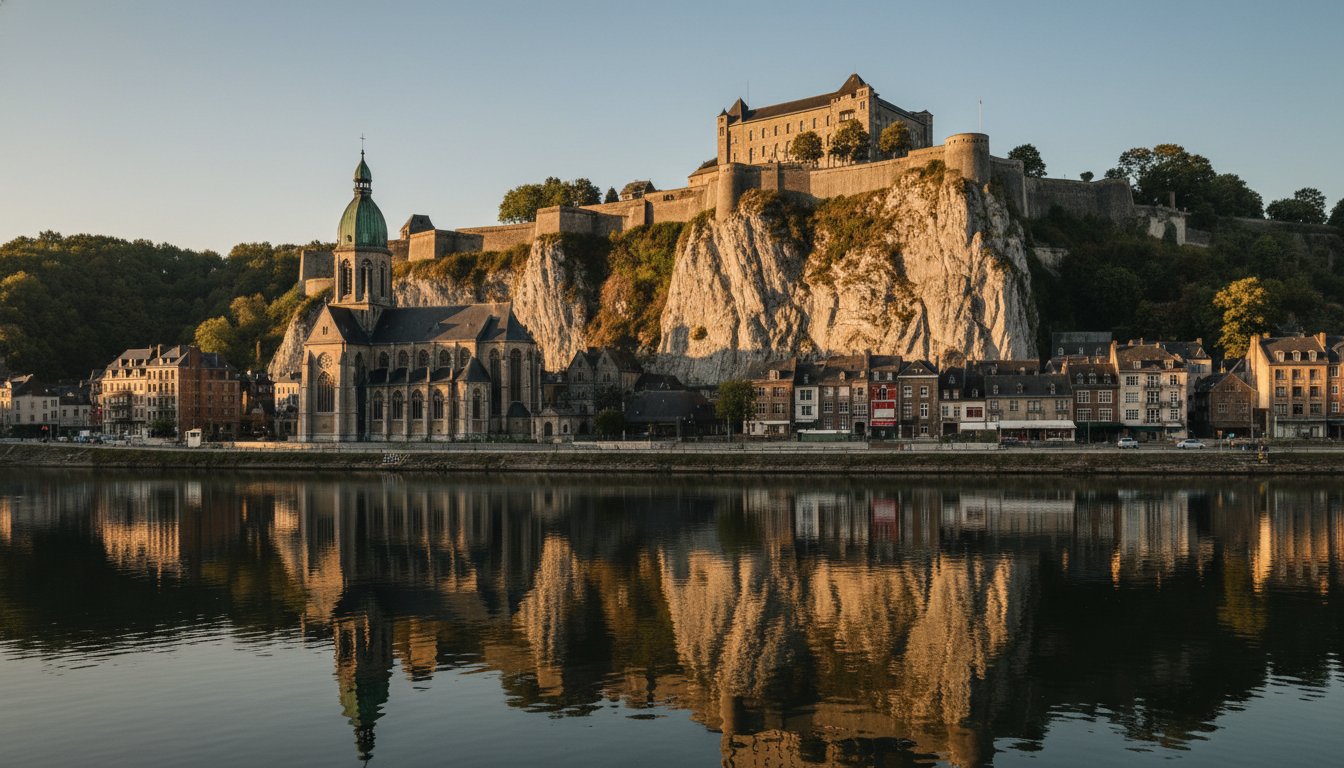
A city’s soul isn’t found in its breadth, but in its height. In dinant wallonia, the landscape demands a vertical mastery where 100 meter limestone cliffs dictate the very rhythm of human design. It’s a place where light and shadow play across ancient stone, creating a sublime harmony between natural grandeur and architectural precision. You’ve likely seen the classic postcard views, yet you know that a true cultural experience requires more than a cursory glance from a crowded quay. Planning for high-end groups in such a narrow valley often feels like a logistical puzzle that many organizers avoid.
We’ll show you how to transform these spatial constraints into a sophisticated narrative of heritage and exclusivity. You’ll gain the precise logistical confidence needed to navigate this vertical masterpiece while offering your clients a perspective that transcends the typical tourist trail. This guide explores the architectural symphony of the Meuse riverfront and the specific systems that make this 11th century heritage site accessible for elite group itineraries.
Key Takeaways
- Understand how the vertical geography of dinant wallonia shapes its architectural identity, from the limestone cliffs to the Meuse riverbanks.
- Explore the symbolic dialogue between the Citadel’s defensive majesty and the iconic pear-shaped bell tower of the Collegiate Church of Notre-Dame.
- Discover the sensory heritage of the region, tracing the history of the saxophone and the ancient, intricate art of brass-working.
- Master the logistics of high-end group travel, including essential insights on coach accessibility and navigating the narrow, scenic banks of the Meuse.
- Learn how to transform a standard visit into a bespoke cultural immersion with tailored itineraries and professional fleet management.
The Vertical Majesty of Dinant Wallonia: An Introduction
Dinant is a spectacle carved from limestone. Known historically as Divo Nanto or the Sacred Valley, this Celtic settlement has evolved into the legendary “Daughter of the Meuse.” It’s a place where geography dictates destiny. A narrow ribbon of urban life clings to the base of 100-meter cliffs, creating a silhouette that’s instantly recognizable across Europe. By 2026, dinant wallonia has solidified its status as the premier cultural icon of the Ardennes, blending ancient stone with a vibrant, modern energy that inspires architectural awe.
The landscape evokes a profound emotional resonance. It’s a vertical masterpiece. The interaction between the dark river and the pale rock creates a natural chiaroscuro, a play of light and shadow that defines the town’s character. This isn’t just a destination; it’s a vision of resilience where every structure feels like an extension of the earth itself.
The Symbolic Geography of the Meuse Valley
The Meuse river served as a vital trade artery for centuries, connecting the heart of Europe to the sea. Its deep waters provided both protection and prosperity for the local copper merchants. The limestone cliffs acted as a natural fortification, forcing the town to grow upward rather than outward. This unique verticality isn’t merely a geographic constraint. It’s a design philosophy that permeates the region. For a comprehensive history of Dinant and its geographical evolution, one must look at how the 100-meter drop from the plateau to the water’s edge shaped every street and spire into a harmonious, albeit narrow, corridor of life.
A Legacy of Resilience: From 1466 to Modernity
History here is etched into the very stone of the buildings. The year 1466 remains a pivotal date, marking the near-total destruction of the town by Philip the Good. Yet, Dinant rose again. The town’s survival through medieval sieges and the tragic events of August 1914, where 674 residents were killed during the German invasion, speaks to an unbreakable spirit. Today, dinant wallonia stands as a testament to this endurance. The architecture doesn’t just house people; it preserves a narrative of survival. Every nuance of the modern cityscape, from the rebuilt Collegiate Church to the fortified Citadel, reflects a past that refused to be silenced by time or conflict.
The Citadel and the Collegiate Church: A Dialogue in Stone
The skyline of Dinant is a study in verticality. It’s a place where the limestone cliffs of the Meuse valley dictate the rhythm of the architecture. The Citadel and the Collegiate Church of Notre-Dame don’t just sit next to each other; they engage in a silent, centuries-old dialogue. One represents the rigid strength of military defense while the other embodies the airy grace of spiritual aspiration. Together, they define the visual identity of dinant wallonia, creating a silhouette that’s instantly recognizable across Europe. This architectural tension between the defensive heights and the spiritual valley floor creates a rare harmony of power and faith.
Ascending the Citadel: History from the Heights
The Citadel stands as a sentinel. While its foundations date back to the 10th century, the structure visitors see today is the result of the 1818 Dutch reconstruction in the Vauban style. It’s a masterpiece of military engineering that has withstood centuries of siege and shift. You can reach the summit by a modern cable car, which offers a smooth ascent and panoramic views of the river. For those seeking a physical connection to the past, the 408 stone steps carved directly into the rock face provide a visceral experience. Once at the top, the WWI museum provides a haunting look into the 1914 Battle of Dinant. The “collapsed trench” exhibit uses sensory disorientation to simulate the brutal reality of the Great War, offering profound educational value through its immersive design.
The Collegiate Church: A Masterpiece of Mosan Gothic
Below the fortress, the Collegiate Church of Notre-Dame anchors the valley floor. Its most striking feature is the 16th-century pear-shaped bell tower. This iconic onion dome has become the symbol of the region, contrasting beautifully with the grey limestone of the cliff behind it. As an architectural gem of Mosan Gothic style, the interior is bathed in a soft, ethereal light filtered through massive stained-glass windows, including one of the largest in Europe. The high altar and the exceptional acoustics transform every sound into a resonant echo. This landmark is a key reason why many call Dinant, Daughter of the Meuse. To experience this serenity without interruption, plan your visit between 10:00 AM and 5:00 PM; this avoids local religious services and allows for quiet reflection.
Just as the right lighting can sublime an architectural space, the natural interplay of shadow against these limestone structures brings the history of dinant wallonia to life. The transition from the dark, defensive corridors of the Citadel to the luminous nave of the church offers a sensory journey through time. It’s a masterclass in how light and stone can be used to command respect and inspire awe simultaneously.
The Sensory Heritage of Dinant: Music, Metal, and Taste
To walk through Dinant is to experience a symphony of textures and tones. This city doesn’t just display its history; it vibrates with it. From the metallic ring of ancient hammers to the deep resonance of a saxophone, dinant wallonia offers a sensory immersion that bridges the gap between medieval craftsmanship and modern artistic vision. It’s a place where the air carries the scent of caramelized honey and the visual landscape is defined by the golden reflection of polished brass.
The Legacy of Adolphe Sax
Adolphe Sax transformed the global auditory landscape in 1846 when he patented the saxophone. His birthplace on Rue de l’Enfer is now the Maison de Monsieur Sax, an interpretive center that invites visitors to explore his visionary mind. Outside, the Charles de Gaulle Bridge serves as an open-air gallery featuring 28 giant, vibrantly decorated saxophones. These sculptures offer a striking contrast to the limestone cliffs behind them. For those seeking deeper immersion, the Maison de la Pataphonie provides a journey into “instrumental poetry,” where everyday objects become sources of music. Looking toward 2026, the city’s cultural programming is set to expand its musical festivals, reinforcing its status as a sanctuary for jazz and innovation.
Dinanderie and the Craft of Light
The technical mastery of the “Batteurs de Cuivre,” or brass-beaters, defined Dinant’s economy for centuries. This ancient art, known as Dinanderie, involves the creation of sophisticated yellow brass-work. During the 12th and 15th centuries, these artisans influenced the aesthetic of European cathedrals, producing baptismal fonts and altars that captured and diffused light with unparalleled warmth. This isn’t merely a relic of the past. Modern workshops still operate in the region, preserving a dying art for visitors who appreciate the precision of hand-wrought metal. The way these surfaces interact with light remains a masterclass in architectural harmony.
Gastronomy: The Flavors of the Ardennes
The culinary identity of dinant wallonia is as robust as its history. The Couque de Dinant is a tactile cultural relic. It’s often called the hardest biscuit in Europe. Made from a simple 1:1 ratio of wheat flour and honey, it’s pressed into hand-carved pearwood molds and fired at 300°C. This high-temperature caramelization creates a legendary durability. Other local staples include:
- Flamiche Dinantaise: A savory tart featuring “boulette de Romedenne” cheese and eggs, traditionally served hot.
- Leffe Abbey: Founded in 1240, this Premonstratensian abbey is the spiritual home of one of Belgium’s most iconic beers.
- Ardennes Venison: Seasonal dishes that reflect the deep forests surrounding the Meuse valley.
Each flavor profile tells a story of the land. Whether it’s the monastic discipline of a Leffe blonde or the artisanal rigor of a honey biscuit, the gastronomy here is a testament to the region’s enduring excellence.
Logistics of Elegance: Planning Group Visits to Wallonia
Organizing a high-end group excursion requires a delicate balance between technical precision and aesthetic appreciation. In the narrow corridor where the rock meets the water, dinant wallonia demands a structured approach to movement. Success lies in mastering the verticality of the landscape while ensuring a seamless flow for guests who expect comfort and exclusivity.
Coach Logistics and Infrastructure
Navigating the tight riverbanks involves strict adherence to local regulations. Large vehicles should utilize the dedicated drop-off zone at Place Patenier, located approximately 300 meters from the central hub. This prevents congestion on the Rue Adolphe Sax. For long-term stays, drivers must relocate to the specific coach park at the Citadel’s upper plateau, accessible via the Route de Philippeville. The Charles de Gaulle Bridge, famous for its saxophone art, maintains a strict weight monitoring system; coaches must follow the central lane to distribute weight evenly across the 1950s structure. For groups exceeding 40 participants, we recommend staggered arrivals at 15-minute intervals to maintain a sense of private discovery rather than mass tourism.
River Cruises: Perspective from the Water
To truly grasp the “ribbon town” architecture, one must view it from the Meuse. Standard tours offer a glimpse, but high-end groups should prioritize private charters. These vessels provide a serene environment to observe how light interacts with the limestone cliffs. We suggest scheduling cruises between 16:00 and 18:00 during the summer months. At this hour, the sun hits the Collegiate Church of Notre-Dame at a 45-degree angle, creating a sublime interplay of shadow and gold. Many boutique operators now offer “Terroir Tables,” where guests enjoy local Couque de Dinant and artisanal cheeses while floating past the Bayard Rock. It’s a curated experience that transforms a simple transit into a sensory event.
The journey shouldn’t end at the city limits. Just 15 kilometers north, the Gardens of Annevoie offer a masterclass in 18th-century water engineering. Alternatively, a 10-minute drive east leads to Celles, officially recognized as one of the “Plus Beaux Villages de Wallonie” since 1994. These extensions allow for a diverse itinerary that balances Dinant’s vertical drama with the horizontal grace of the Walloon countryside.
Discover how professional lighting design can sublime your architectural projects with the same precision used to highlight historic landmarks.
Curating the Extraordinary: Your Dinant Itinerary with BELUNE
Travel is an art form that requires both technical precision and a visionary’s touch. At BELUNE, we transform a standard visit into a bespoke cultural immersion. We view the landscape of dinant wallonia as a canvas where history meets the senses. Our philosophy centers on the emotional resonance of a place; we ensure your guests don’t just see the Meuse valley, they feel its ancient pulse through a curated lens of sophistication.
Our private coach fleet handles the winding Ardennes roads with silent grace. Equipped with Euro 6 engines and ergonomic interiors, these vehicles accommodate groups ranging from 15 to 50 travelers. This technical excellence ensures total comfort while navigating the dramatic limestone geography of the region. Behind the wheel and at the front of the cabin, our expert local guides act as artisans of narrative. They are storytellers who reveal the shadow and light of Dinant, balancing the dark history of the 1914 events with the bright, melodic legacy of Adolphe Sax.
Tour operators find peace of mind in our fixed-price packages. We eliminate the friction of hidden costs by providing comprehensive logistics that cover every detail from port-to-port. This transparency allows our partners to focus on their clients while we manage the complex machinery of group travel.
The BELUNE Advantage for B2B Partners
Since our founding in 2004, we’ve managed over 1,200 successful group itineraries across Belgium. We maintain 85+ direct partnerships with heritage sites and 4-star boutique hotels, ensuring priority access and exclusive rates for our collaborators. Our programs aren’t mass-produced; they’re hand-crafted compositions. Whether focusing on the technical nuances of Art & Culture or the poignant trails of Battlefield Tourism, we provide a seamless bridge between local expertise and international expectations.
Designing Your 2026 Wallonia Program
Planning for the 2026 season involves more than just selecting dates. We integrate dinant wallonia into broader Benelux circuits, often connecting the Meuse valley with the historic sites of Bastogne or the artistic hubs of Flanders. Every itinerary starts with a dialogue. Requesting a custom quote is the first step toward a flawless group experience that prioritizes harmony and excellence. You can Sublime your next group tour with BELUNE to ensure your offering stands out in a crowded market through our signature blend of luxury and authenticity.
Elevate Your Perspective on Wallonian Heritage
Dinant isn’t just a destination; it’s a vertical symphony carved into the Meuse valley. From the 408 steps leading to the Citadel to the brass resonances of Adolphe Sax’s 19th-century legacy, every corner offers a masterclass in Belgian resilience. Exploring dinant wallonia requires more than a map. It demands a curator’s eye for detail and a logistician’s precision to handle the complexities of group travel.
BELUNE brings 20 years of DMC expertise to the table, specializing in Art & Culture group tours that transcend the ordinary. We manage every nuance of the journey with our private fleet of modern coaches, providing a seamless transition between the 13th-century stone of the Collegiate Church and the sensory delights of local terroir. Our team acts as a visionary ally, ensuring your project meets the highest standards of elegance and technical rigor. We invite you to Partner with BELUNE for your next group itinerary in Wallonia and transform a simple trip into a lasting masterpiece. Your journey into the heart of the Ardennes awaits.
Frequently Asked Questions
Is Dinant accessible for groups with limited mobility?
Dinant offers accessibility through specific infrastructure like the Citadel cable car and adapted river cruises. While the historic 408-step climb to the fortress remains a challenge, the modern lift provides seamless access for those with limited mobility. The Le Copère and Le Sax cruise ships accommodate 100% of wheelchair users on their main decks. We recommend the flat Meuse riverfront promenade for an effortless 1.5-kilometer stroll through the city’s architectural heart.
What is the best time of year to plan a group visit to Dinant Wallonia in 2026?
The optimal period for a group visit to dinant wallonia in 2026 spans from May to September. During these months, average temperatures hover around 21°C, providing the perfect light to illuminate the limestone cliffs. Planning for the Sax and the City events in August 2026 ensures a vibrant atmosphere. This window avoids the 120 millimeters of average rainfall typical of the late autumn season, ensuring outdoor heritage sites remain fully enjoyable.
Can a 50-seater coach easily navigate the streets of Dinant?
Large 50-seater coaches can navigate Dinant by utilizing the N97 bypass rather than the narrow Rue Grande. Drivers should head directly to the dedicated coach parking at Place Patenier or near the Citadel, which offers 15 designated spots for long-haul vehicles. Navigating the town center requires precision due to the 19th-century street widths. We advise entering via the Bouvignes side to ensure a fluid arrival for your passengers.
How long should a group spend in Dinant to see the main sights?
A comprehensive group visit requires between 5 and 7 hours to experience the primary cultural landmarks. This timeframe allows for a 2-hour guided tour of the Citadel, a 45-minute Meuse river cruise, and a 60-minute immersion at Maison Leffe. If your itinerary includes the nearby Furfooz Park, extend the stay to 9 hours. Efficiency in scheduling ensures each site reveals its history without the pressure of a rushed transition.
Are there group-friendly dining options that cater to international dietary needs?
Dinant features several establishments equipped to handle large groups with diverse dietary requirements. The La Citadelle restaurant accommodates 200 guests and provides standardized vegetarian options. For more specific needs, Le Jardin d’en Bas offers 3 distinct gluten-free and vegan menus upon 48-hour notice. These venues combine culinary excellence with the logistical capacity required for international delegations. Quality remains high, mirroring the city’s sophisticated hospitality standards.
Does Dinant offer specific programs for Battlefield Tourism groups?
Specific programs focus on the tragic events of August 1914, providing a somber, educational perspective for history-focused groups. The Citadel’s 1914 Space uses sensory exhibits to detail the battle, while the Mur des Fusillés memorial honors the 674 civilians lost during the conflict. Guided tours often link these sites with the nearby Cemetery of the French. These itineraries transform historical data into a poignant, human experience of resilience.
What are the must-see sites within a 20-minute drive of Dinant?
The Jardins d’Annevoie and the Château de Vêves are essential stops located within a 15-kilometer radius of the city. Annevoie features unique 18th-century water gardens that operate without pumps, utilizing natural pressure alone. Meanwhile, the Château de Vêves, just a 10-minute drive away, offers a perfectly preserved example of 15th-century military architecture. Exploring these sites enriches the narrative of dinant wallonia by showcasing the region’s broader aristocratic heritage.
How does the cable car to the Citadel handle large groups?
The Citadel cable car efficiently manages large groups by transporting up to 40 passengers per cabin. With a rotation every 10 minutes, a standard 50-person coach group can reach the summit in less than 20 minutes. This vertical ascent offers a panoramic view of the Meuse valley, serving as a breathtaking introduction to the fortress. It’s a technical solution that prioritizes comfort while maintaining a steady flow of visitors to the historical plateau.