In 2026, a successful Dutch tour is no longer measured by the destinations visited, but by the invisible precision of the logistics behind them. You’ve likely felt the pressure of a shifting landscape where the national VAT on accommodation has jumped to 21% and Amsterdam’s tourist taxes demand more from your budget than ever before. It’s a persistent challenge to secure premium hotel blocks or coordinate reliable holland group tour packages when local transport and timed-entry requirements become increasingly complex. We understand that for a professional travel partner, the beauty of a canal-side sunset is easily eclipsed by the stress of an unreliable coach or a missed museum slot.
This article shows you how to design sophisticated travel experiences that rise above these hurdles through the expertise of a premier Benelux DMC. We’ll explore the fusion of private coach reliability, artisanal cultural curation, and strategic B2B partnerships. You’ll discover a masterclass in turning logistical obstacles into a seamless, high-end journey. We’ll detail how a visionary approach to hotel management and expert local guides can transform a standard itinerary into an exclusive cultural experience that resonates with your clients long after they return home.
Key Takeaways
- Master the nuances of designing holland group tour packages that blend logistical precision with immersive, slow-travel cultural storytelling.
- Explore the operational advantages of partnering with a DMC that manages its own modern coach fleet for unparalleled reliability across the region.
- Learn to navigate the 2026 landscape of increased VAT and tourist taxes through sophisticated hotel accommodation and attraction management.
- Discover how specialized themes like art, gastronomy, and battlefield tourism create a distinct competitive edge for your group itineraries.
- Understand why 20 years of local expertise is the essential foundation for a seamless, professional B2B partnership that protects your brand’s reputation.
What Defines Premium Holland Group Tour Packages in 2026?
Modern group travel has moved beyond the transactional. In 2026, a premium experience is a curated ecosystem where every transfer, meal, and museum entry is part of a deliberate narrative. Off-the-shelf itineraries often fail the professional travel agent because they ignore the subtle textures and logistical realities of the region. Sophisticated holland group tour packages now require a blend of technical precision and artistic vision, ensuring that a group doesn’t just see the country but understands its pulse. It’s about transforming a simple itinerary into a strategic asset for your business.
The Evolution of Dutch Group Travel
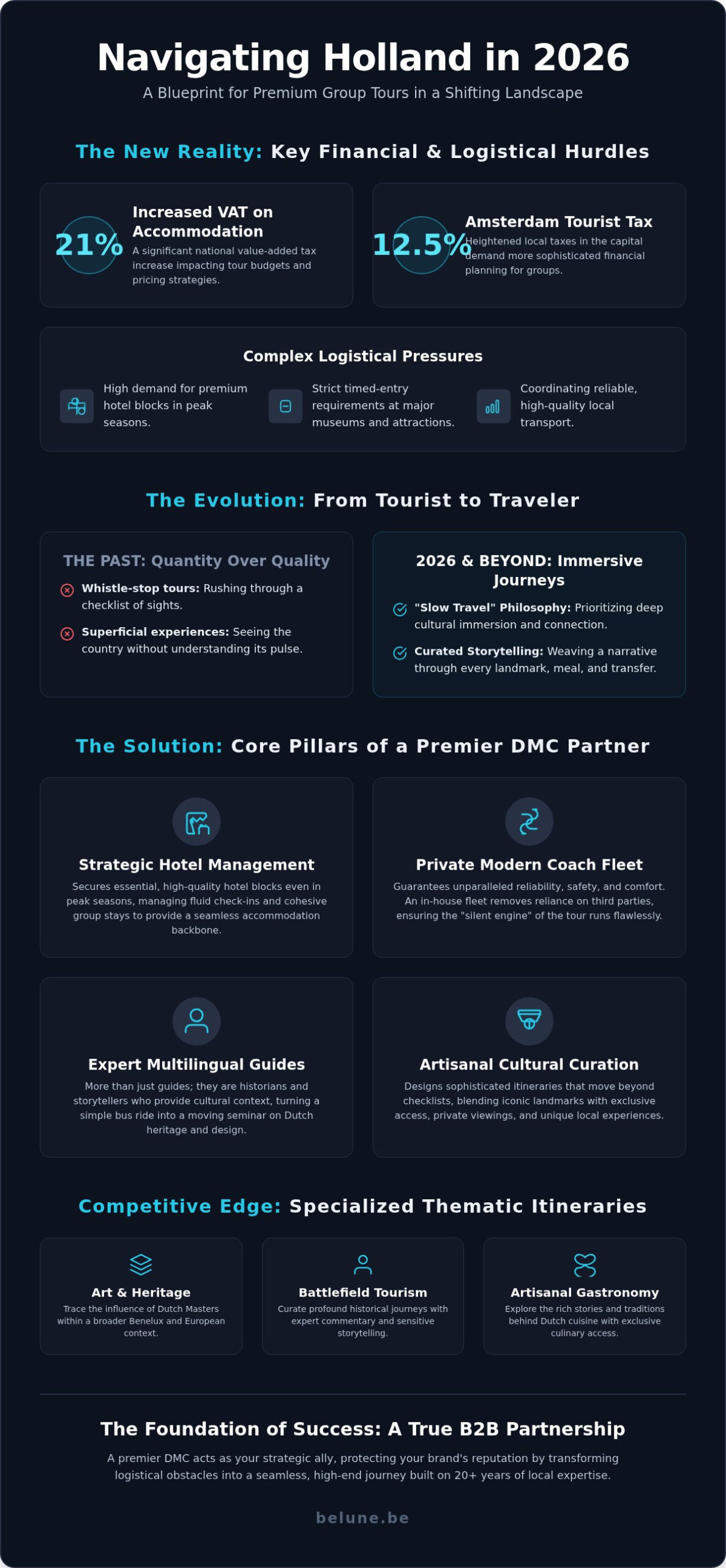
Whistle-stop tours are a relic of the past. Today’s travelers seek deep cultural immersion, favoring “slow travel” that prioritizes quality over quantity. This shift is evident in the growing interest in Dutch heritage and artisanal gastronomy. With 23.7 million overnight stays recorded in Amsterdam alone in 2025, the demand for high-comfort, sustainable logistics is at an all-time high. Heritage tours in 2026 focus on the stories behind the dikes and the canvases. They require guides who are as much historians as they are storytellers. We’re seeing a clear preference for itineraries that integrate Dutch culture into broader Benelux narratives, creating a more comprehensive European story.
Why a DMC is Essential for Holland Packages
Managing groups in the Netherlands involves a complex dance of regulations and timing. The 2026 VAT increase to 21% on accommodations and the 12.5% tourist tax in Amsterdam have made budget management a high-stakes endeavor for international partners. An incoming tour operator acts as your strategic ally. They secure essential hotel blocks in peak seasons and manage the strict timed-entry requirements for sites like the Rijksmuseum or Keukenhof. Understanding the broader context of tourism in the Netherlands is vital for maintaining quality control across various provinces.
A reliable partner doesn’t just provide services; they protect your reputation. By deploying a private fleet of modern coaches and providing multilingual local guides, a DMC ensures that the “silent engine” of the tour runs without friction. This level of oversight is what separates a standard trip from a masterclass in travel. It’s the difference between a group that is merely transported and one that is truly moved by the experience. We position ourselves not just as a supplier, but as the architect of these seamless holland group tour packages.
Core Components of a Sophisticated Holland Itinerary
Sophistication in 2026 means moving beyond a simple checklist. While the official guide to Holland highlights essential sights, a masterclass in travel design layers these landmarks with exclusive access. Holland group tour packages excel when they balance the grandeur of the Rijksmuseum with private gallery viewings or canal cruises that avoid the standard tourist routes. It’s a delicate choreography. You need professional hotel accommodation management to ensure groups move fluidly between these points without the friction of check-in delays or disjointed room blocks. This logistical backbone is what allows the creative vision of the tour to shine, providing a sense of effortless luxury for the end client.
Multilingual local guides are the architects of this narrative. They don’t just recite dates; they provide the connective tissue between the landscape and the culture. In a market where travelers are increasingly knowledgeable, having a guide who can pivot from 17th-century naval history to modern Dutch design is invaluable. This expertise ensures your brand delivers a story, not just a schedule. These guides act as cultural bridges, essential for tours that span multiple regions, ensuring a consistent tone and depth of information throughout the journey. They turn a bus ride into a moving seminar on Dutch heritage.
Art and Heritage: The Dutch Masters and Beyond
Dutch art doesn’t exist in a vacuum. By curating tours that link the Golden Age masters to the broader culture group tours Benelux framework, we offer a more profound understanding of European history. Whether it’s tracing the influence of Flemish painters on Dutch masters or exploring the contemporary art scene in Rotterdam, these itineraries require expert commentary. We move beyond guidebook facts to explore the technical mastery and social context of the works. This approach satisfies the intellectual curiosity of modern groups while maintaining a high level of aesthetic engagement. It’s about seeing the brushstrokes, not just the frame.
Gastronomy and Local Flavors
Culinary experiences are the sensory heart of a tour. We design programs that range from the traditional cheese markets of Alkmaar to high-end dining in Amsterdam. Drawing inspiration from the precision of Belgium gastronomy tours, we apply the same high standards to Dutch food programs. Managing group reservations in Holland’s most sought-after venues requires foresight, especially with the 2026 demand. We handle the complexities of group dining logistics, ensuring that gastronomy becomes a highlight rather than a hurdle. If you’re looking to elevate your next itinerary, consider how a strategic DMC partnership can secure these exclusive culinary moments.
Logistical Choreography: Navigating Holland with Ease
Logistics is more than a schedule. It’s a technical discipline that requires both foresight and agility. For holland group tour packages to succeed in 2026, every mile must be planned with surgical precision. The Dutch tourism economy remains a vital pillar of the region, but its density requires a sophisticated approach to movement. We view transport as a structural component of the tour’s aesthetic. It’s about the rhythm of the road and the serenity of the cabin. Managing driver hours and navigating the specific traffic flows of the Randstad area demands a level of technical rigor that only comes with decades of experience. It’s the silent engine that keeps the client’s imagination focused on the destination rather than the delay.
The Power of a Private Coach Fleet
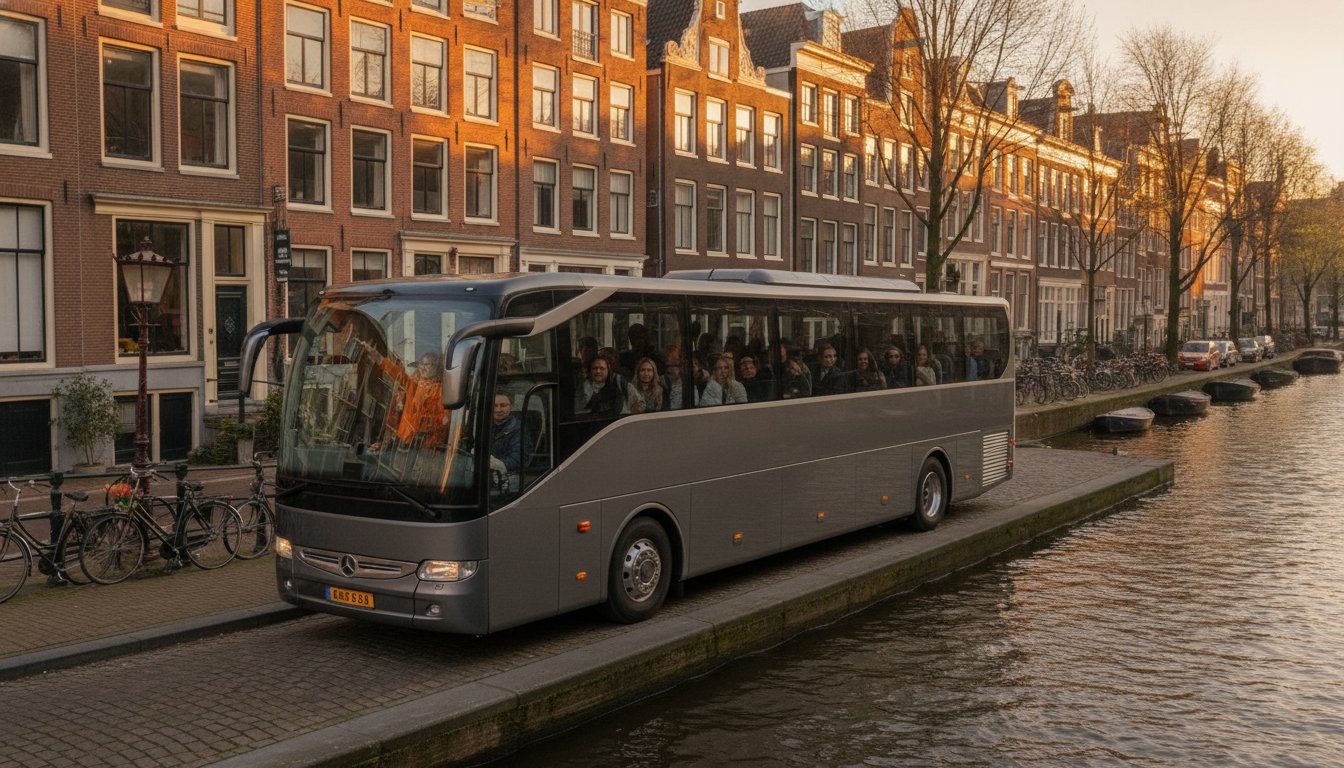
Owning our fleet of modern coaches isn’t just a business choice; it’s a commitment to quality control. When a DMC manages its own vehicles, the standards of hygiene and comfort are never left to chance. This internal management allows us to guarantee a level of consistency that third-party bookings simply can’t match. It’s about providing a sanctuary on wheels.
- Standardization: Every coach meets the highest 2026 safety and environmental specifications, reflecting a modern, artistic vision of travel.
- Operational Flexibility: Real-time adjustments to itineraries are possible because the driver, the vehicle, and the planning team are part of the same unified structure.
- Amenities: High-comfort seating and modern amenities ensure that transit time is a period of relaxation rather than a logistical hurdle.
Seamless Benelux and Paris Connectivity
The “Golden Triangle” of Holland, Belgium, and Paris is a sought-after route for international groups. However, cross-border transfers often introduce unnecessary friction when multiple vendors are involved. A single, specialized DMC partner eliminates these disjointed transitions. By using one provider for the entire Benelux and Paris region, you ensure that the narrative and quality of the tour remains unbroken.
The technical transition between Dutch polders and the streets of Paris should feel effortless. We handle the intricacies of local transport regulations across three different countries, allowing your clients to focus on the scenery. This holistic management reduces administrative weight for tour operators. It transforms a complex multi-country journey into a unified, high-standard experience. Reliability isn’t just a promise; it’s a structural reality built into every kilometer we drive, ensuring your reputation remains as polished as our fleet.
Selecting the Right DMC Partner for Holland Tours
Choosing a Benelux incoming tour operator is a strategic decision that defines the ceiling of your project’s success. It’s not merely a procurement task; it’s the selection of a strategic ally. In a landscape where holland group tour packages are subject to shifting tax laws and high demand, reliability is the primary currency. A professional partner must offer more than just a list of services. They must provide a visionary approach that treats logistics as an art form. When evaluating potential partners for 2026, look for these essential markers of excellence:
- Asset Ownership: Does the partner manage their own fleet of modern coaches to ensure consistency and hygiene?
- Financial Clarity: Do they offer fixed-price packages to protect your margins against the 21% VAT increase on Dutch accommodation?
- B2B Specialization: Is their business model strictly focused on professional travel partners rather than individual bookings?
- Themed Expertise: Can they provide specialized guide services for art, gastronomy, or battlefield tourism?
Experience remains the most significant trust marker in the Dutch market. A partner with over 20 years of industry experience brings more than just stability. They bring a deep-rooted network of relationships with hotel managers and site directors that a newer booking agent simply cannot replicate. This history allows for the technical mastery required to navigate the complexities of 2026 travel while maintaining a sophisticated, high-end narrative for your clients.
Evaluating Experience and Local Network
A true Destination Management Company acts as the architect of the experience. Deep-rooted local relationships are the only way to secure exclusive access to sites or preferred hotel blocks during peak seasons. There’s a fundamental difference between a booking agent who resells inventory and a DMC that actively manages the quality of every component. Understanding the nuances of the Dutch market, from the timing of flower auctions to the specific regulations of regional coach access, requires a partner who lives and breathes the local environment every day.
The Importance of Bespoke Itinerary Design
Standard templates are no longer sufficient for the modern professional agent. To differentiate your agency in a crowded market, you need bespoke itinerary design that reflects the unique interests of your group. Whether it’s a cycling tour through the polders or a deep dive into the Dutch Masters, a custom approach adds significant value. Your partner should act as a visionary advisor, helping you craft a narrative that resonates with sophisticated travelers. If you are ready to elevate your offerings for 2026, it is time to partner with an expert DMC who understands the fusion of technical rigor and artistic curation.
BELUNE: Elevating Dutch Group Experiences through Sophisticated Management
At BELUNE, we don’t view ourselves as a mere supplier. We are the architects of your vision. Designing holland group tour packages for a 2026 audience requires more than a contact list; it demands a fusion of technical rigor and an artistic eye for detail. We’ve spent over 20 years refining the choreography of group travel across the Benelux region, ensuring that every logistical element serves the broader narrative of the journey. Our role is to act as your strategic ally, transforming complex requirements into a seamless, high-end reality that protects your brand’s reputation and delights your clients.
Our comprehensive approach covers the entire spectrum of group management. From sophisticated hotel accommodation management that secures the best blocks in a high-tax environment to the deployment of our private coach fleet, we maintain total control over the quality of the experience. This vertical integration is rare in the industry. It allows us to offer a level of consistency and reliability that reselling agencies simply can’t match. We provide the structural backbone so you can focus on the creative growth of your travel business.
Our Legacy of Excellence in the Benelux Region
Our Belgian roots provide a unique vantage point on the Dutch landscape. We understand the cultural nuances that link the Low Countries, allowing us to craft itineraries that feel authentic and deeply rooted in local heritage. The “Belune touch” is defined by a minimalist elegance. We believe that professional service should be felt, not seen. This means technical precision in our timing, a sober but passionate approach to our storytelling, and an unwavering commitment to high-end standards. We’ve built our legacy on being the expert of the expert, providing the technical mastery that international tour operators rely on for their most demanding projects.
Partner with Us for Your 2026 Holland Programs
The 2026 travel season in the Netherlands presents specific challenges, from increased VAT to strict museum entry slots. Partnering with us gives you immediate access to a robust local guide network and a modern, private coach fleet designed for the comfort of the modern traveler. We offer fixed-price, fully managed group packages that take the guesswork out of your financial planning. This transparency is essential for maintaining healthy margins in a shifting economic landscape.
We invite professional partners to co-create exceptional itineraries with us. Whether your focus is on the technical history of battlefield tourism or the sensory depths of gastronomy and art, we have the specialized expertise to bring your vision to life. The next steps are simple: a collaborative dialogue where we listen to your needs and apply our 20 years of expertise to build something truly extraordinary. Let’s design the future of Dutch travel together. Connect with our team to begin crafting your 2026 programs.
Architecting the Future of Dutch Travel
Navigating the Dutch landscape in 2026 requires a fusion of visionary curation and technical rigor. You’ve seen how the rise in VAT and tourist taxes demands more precise financial planning and strategic hotel management. Success lies in moving beyond generic itineraries to embrace the “slow travel” movement through expertly guided art and gastronomy programs. These elements ensure your brand stays ahead of a shifting market while delivering profound cultural value.
By selecting a partner with over 20 years of Benelux DMC experience and a private fleet of modern coaches, you eliminate the friction of unreliable logistics. This structural stability allows you to deliver the sophisticated holland group tour packages your clients expect. We provide the technical backbone that transforms a standard trip into a masterclass in travel design. Our commitment to sophisticated B2B group logistics ensures that your reputation remains flawless across every kilometer driven.
Ready to elevate your offerings? Partner with BELUNE for your custom Holland group tour itinerary and secure a seamless, professional future for your 2026 programs. We look forward to co-creating something extraordinary together.
Frequently Asked Questions
What are the benefits of booking Holland group tour packages through a DMC?
Booking through a specialized DMC provides access to local expertise and logistical control that a standard agent lacks. We handle the complexities of timed-entry slots and regional regulations, ensuring your programs run without friction. By managing the technical details of holland group tour packages, we protect your brand’s reputation. You gain a strategic ally that understands the B2B landscape, providing fixed-price reliability and professional oversight for every component of the journey.
Do you offer customizable itineraries for specific group interests like art or history?
We design fully customizable itineraries that align with your group’s specific intellectual or cultural interests. Whether your clients seek a deep dive into the Dutch Masters or a technical exploration of battlefield history, our team crafts bespoke narratives. We move beyond generic templates to provide artisanal curation. This approach ensures that every site visit and local interaction adds structural value to the tour, creating a unique experience that differentiates your agency from competitors.
What types of transport are included in your Holland group packages?
Our packages primarily feature transport via our own private fleet of modern coaches. Owning the vehicles allows us to guarantee the highest standards of hygiene, comfort, and safety across the region. We also manage international flight and train bookings to ensure a seamless arrival and departure process. This integrated approach to transport acts as the silent engine of the tour, providing a consistent, high-end experience that matches the sophistication of your itinerary.
Can your Holland tours be combined with Belgium and Paris itineraries?
Yes, our Holland tours are frequently integrated with Belgium and Paris to create a comprehensive Benelux and French capital experience. We manage the logistical choreography of the “Golden Triangle,” ensuring smooth cross-border transitions. By using a single DMC partner for multiple countries, you reduce administrative weight and maintain a unified quality standard. This connectivity allows groups to explore the shared heritage of the region while enjoying a fluid, professionally managed journey.
What is the typical group size for your Holland tour packages?
We specialize in managing a wide range of group sizes, from small executive delegations to large-scale professional tours. Our private coach fleet is versatile, allowing us to deploy vehicles that match your specific requirements while maintaining high comfort levels. We don’t handle individual B2C bookings, which means our focus remains entirely on the logistical needs of organized groups. This specialization ensures that every member of the party receives a consistent, high-standard level of service.
Do you provide professional multilingual guides for all excursions?
We provide expert multilingual local guide services for all excursions and themed tours. These professionals are more than just guides; they are cultural storytellers who provide the technical and historical context necessary for a premium experience. Whether your group requires commentary in English, French, or other major languages, we ensure that the narrative remains clear and engaging. Their deep local knowledge is essential for unlocking the hidden stories and exclusive sites within our holland group tour packages.
How do you manage hotel accommodations for large groups in the Netherlands?
Our hotel accommodation management is a core pillar of our service, focusing on securing high-quality blocks in a competitive market. We handle the technical rigor of room allocations and check-in logistics to ensure a fluid flow for your groups. In light of the 2026 VAT increases, our established relationships with hotel partners allow us to provide stable, professional solutions. We prioritize properties that reflect our minimalist elegance and meet the high expectations of your clients.
What makes BELUNE different from other tour operators in the Benelux region?
BELUNE stands out through the fusion of 20 years of industry experience with the ownership of our own coach fleet. We operate as a visionary advisor rather than a simple supplier, offering a level of technical precision and artistic curation that is rare in the Benelux region. Our strict B2B focus means we understand the specific needs of tour operators. We position ourselves as your strategic ally, transforming travel into a seamless, high-end experience through artisanal management.