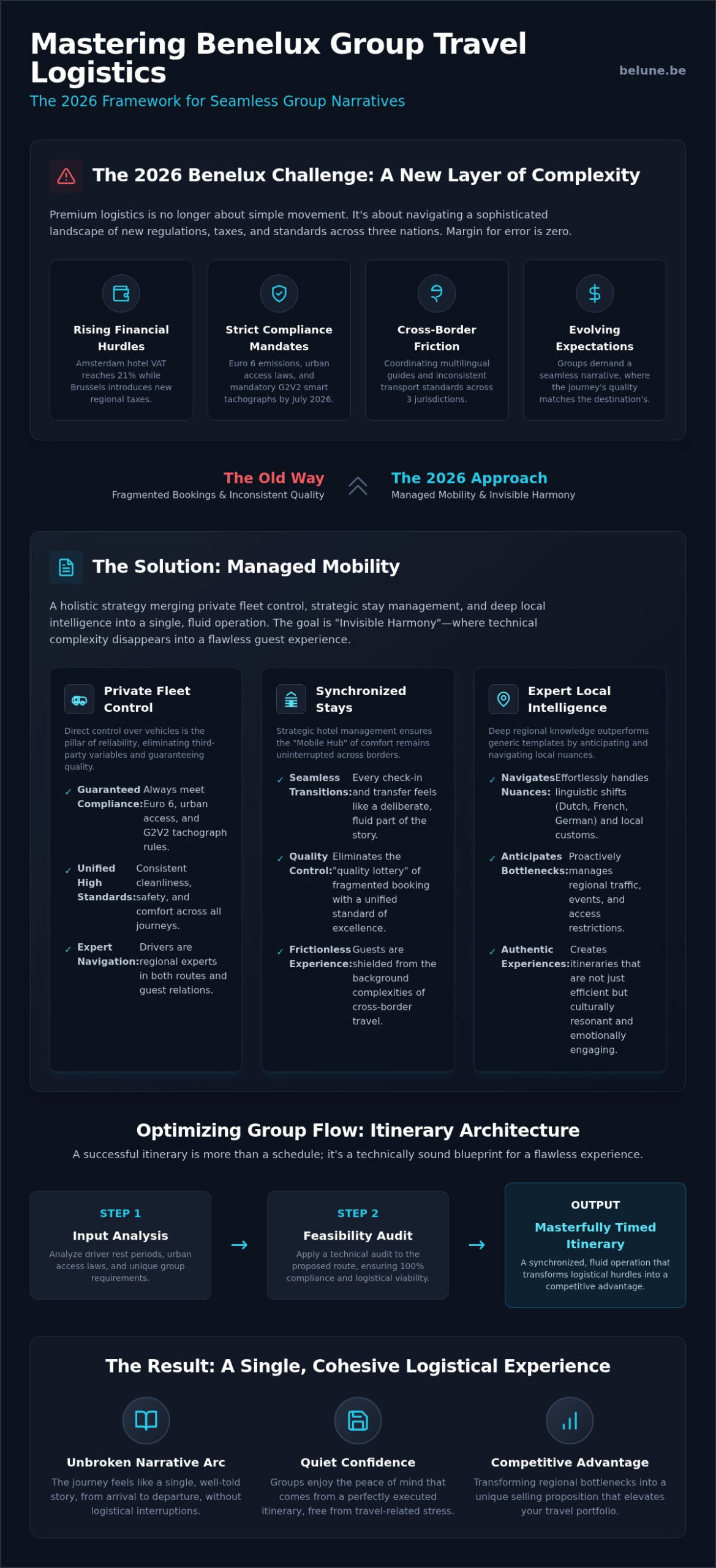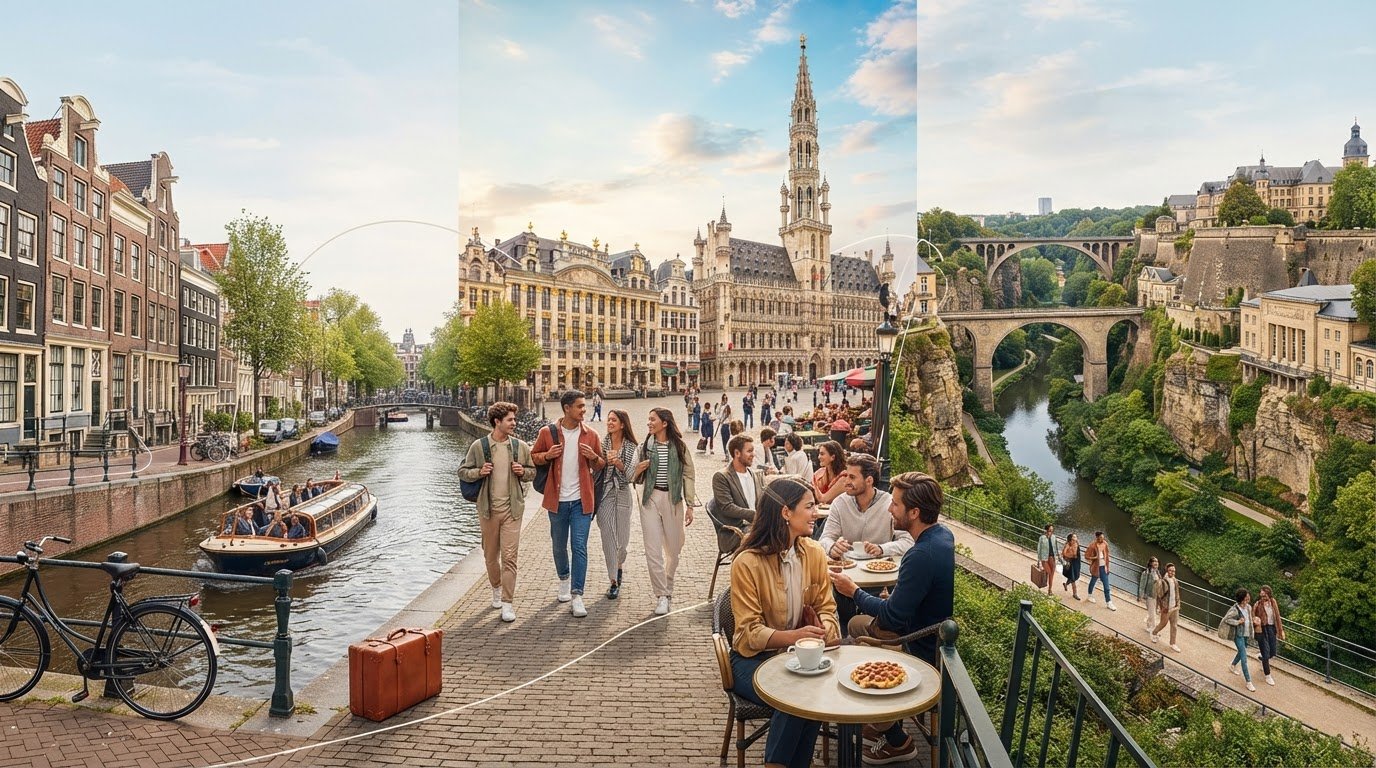
A memorable Benelux proposal is more than a sequence of famous sights. When creating a compelling Benelux travel proposal, build it around a unifying theme, a well-paced route across Belgium, the Netherlands and Luxembourg, and a clear daily plan for activities, accommodation, transport and included experiences. A 10-day itinerary offers one model for bringing the region’s varied city highlights together.
Amsterdam’s museums and canals are natural anchors, but the experience becomes richer when they sit alongside a guided walk and a virtual flight experience. The right mix gives travelers room to connect with each city, rather than simply moving between landmarks.
This guide explores themes that can shape a journey, from culture and gastronomy to history and cycling, then looks at cross-border routes and booking considerations. You’ll also find ideas for making Brussels, Luxembourg City, and Amsterdam distinct, well-connected chapters in a proposal, with practical details to keep the plan inspiring and workable.
Key Takeaways
- Shape the route around a clear theme, then map daily activities, accommodation, transport, and included experiences across Belgium, the Netherlands, and Luxembourg.
- Use Luxembourg City’s fortress walks and free public transport to create a distinctive, easy-to-navigate day in the itinerary.
- Build booking lead time into the proposal early: high-demand venues may call for planning 12 to 18 months ahead.
- Give Brussels and Amsterdam different roles in the journey, pairing landmarks and food experiences with museums, canals, guided walks, and immersive activities.
1. Benelux regional advantages and cross-border itineraries
Belgium, the Netherlands, and Luxembourg form a compact itinerary across three distinct national settings. A regional plan can connect Brussels, Amsterdam, and Luxembourg City, then use rail or private transport to shape the transitions. The region has over 3,000 kilometers of high-speed rail connecting major hubs. A 150-minute travel window between Brussels and The Hague can also support coordinated cross-border travel. These links make it practical to design a journey around experiences, rather than treating each border as a separate trip.
A Benelux itinerary includes Belgium, the Netherlands, and Luxembourg, with destinations chosen to match the group’s interests. One seven-day example allocates 3 days to Belgium, 3 days to the Netherlands, and 1 day to Luxembourg City. An itinerary can be adapted to allow a slower pace or additional stops. The right duration depends on the balance between city visits, travel time, and the experiences the group wants to include.
For US visitors, make passport validity and any required entry authorization explicit pre-departure planning items. Requirements depend on nationality, trip purpose, and length of stay, so distinguish traveler documentation from local transport arrangements in the proposal.
Build the day-by-day itinerary in sequence. Start with the main experience, then allow realistic time for transfers, meals, and accommodation check-in. For example, pair a cultural visit in Brussels with an evening meal, then plan the next cross-border transfer around the following day’s first activity. State what is included and excluded so travelers can picture each day. A clear itinerary gives the group a dependable framework without crowding every hour.
For bespoke corporate travel, begin with the group’s purpose: a cultural program, a shared meal, or time for colleagues to connect. Then choose cities and experiences that support it. A personalized itinerary can set the right pace for a private group while aligning hotel locations and intercity transfers. When creating a compelling Benelux travel proposal, present the route as a deliberate progression, not a checklist of attractions.
Balance major cities with smaller towns by giving each a distinct role. Use Brussels or Amsterdam as a base for museums and urban experiences, then make a smaller destination a focused day trip or overnight stop. Local guides can add context to a town’s history, while gastronomy and beer experiences bring regional character to the schedule. Limit unnecessary backtracking by connecting each stop through geography, theme, or travel mode, and make that logic clear in the daily plan.
2. Luxembourg City sights, walking routes, and public transport
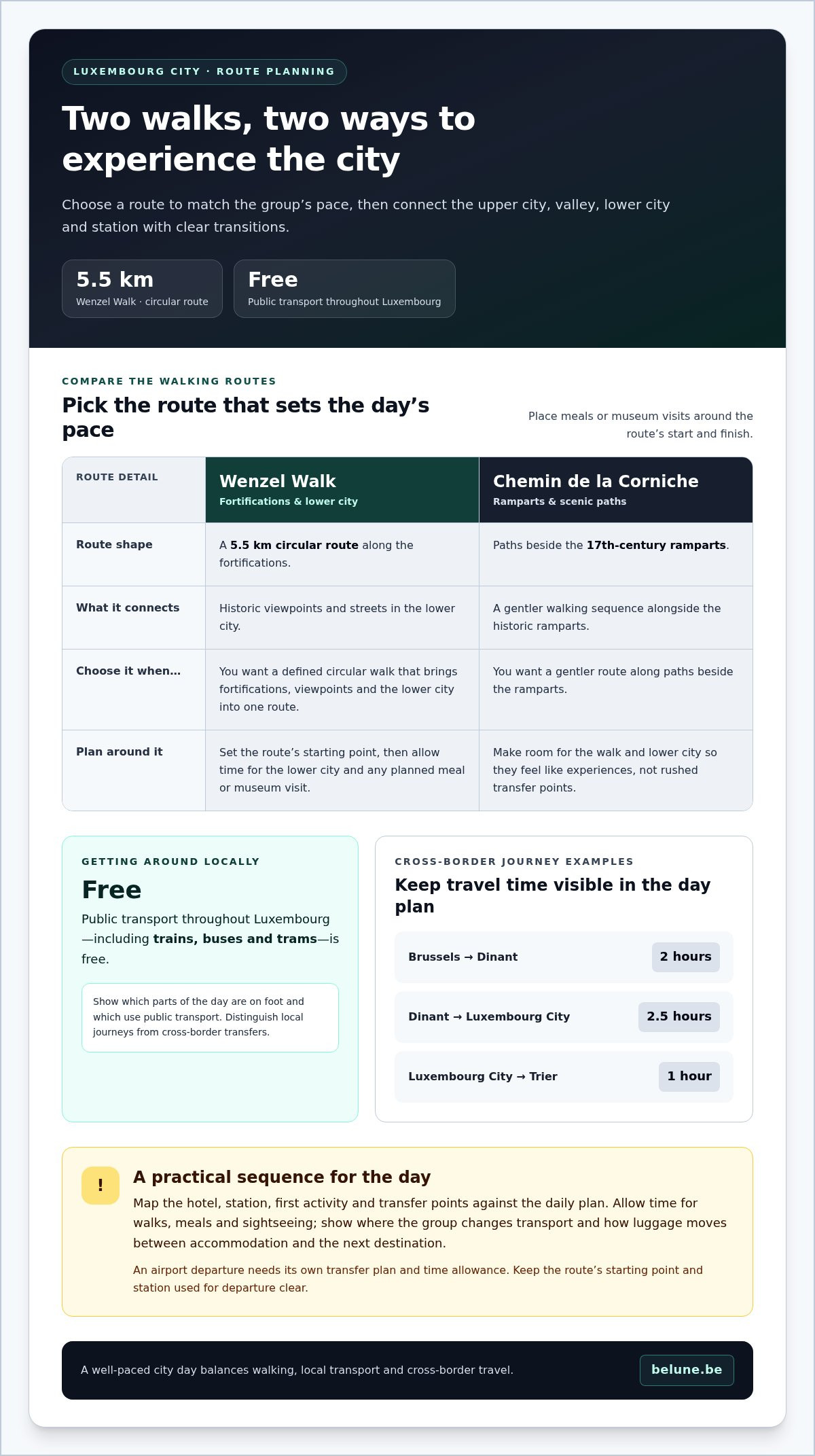
Luxembourg City can anchor a full day around its layered fortress landscape. The Wenzel Walk is a 5.5 km circular route along the fortifications, joining historic viewpoints with streets in the lower city. For a gentler sequence, Chemin de la Corniche follows paths beside 17th-century ramparts. Choose a route based on the group’s pace, then place museum visits or meals around its start and finish.
Public transport throughout Luxembourg, including trains, buses, and trams, is free. This simplifies travel within the country, but a proposal should still distinguish local journeys from cross-border transfers. Show which parts of the day are on foot and which use public transport. Clear transitions help visitors understand the route, especially when it moves between the upper city, the valley, and the station.
Common planning risks include tight connections, accommodation far from the day’s first activity, and transfers that leave too little time for meals or sightseeing. Address them by mapping each hotel, station, airport departure, and scheduled experience against the daily sequence. In Luxembourg City, allow enough time for a walk along the Corniche and a visit to the lower city, so they feel like experiences rather than rushed transfer points.
For cross-border coordination, show where the group changes transport and how luggage moves between accommodation and the next destination. The train journey from Dinant to Luxembourg City takes two and a half hours; Brussels to Dinant takes two hours. These examples help planners estimate how much of the day remains for visits after travel. A journey from Luxembourg City toward Trier takes one hour, while an airport departure needs its own transfer plan and time allowance.
Separate accommodation and transport costs into clear categories. Accommodation affects location and access to the itinerary; transport planning depends on the route, group movement, and whether travel stays within Luxembourg or crosses a border. The total price depends on the arrangements and is provided after a quote request. Key cost factors include accommodation, transport, group arrangements, and selected experiences.
A transparent proposal should show what each option includes and excludes, with accommodation, local transport, cross-border journeys, and experiences clearly separated. Keep assumptions visible, such as the starting point for a walking route or the station used for departure. For a program that combines overnight stays and transfers, consider cross-border accommodation planning as part of the itinerary’s structure.
3. Advance booking and program lead times
Booking lead time shapes which experiences can anchor a Benelux journey. For 2026, plan high-demand Benelux venues 12 to 18 months ahead. A multi-day corporate tour needs at least 6 months of planning lead time. For corporate groups exceeding 100 participants, begin program design 9 months before the event. These milestones give planners time to align venue choices, transport, accommodation, and the client’s schedule.
Work backward from the travel date. First, identify fixed elements such as event dates, major museum visits, or a required arrival day. Then allow planning time for experiences with the least scheduling flexibility. If an architectural visit is set for a specific day, show how it fits around transfers and other commitments. Keep flexible activities separate so the itinerary can adapt without disrupting its central moments.
The Anne Frank House has a distinct ticket-release schedule: online tickets are released every Tuesday for visits six weeks ahead. Build this booking window into the Amsterdam schedule instead of assuming tickets can be arranged at any time. Place the visit on the itinerary only after matching its release timing to the group’s dates. This keeps the wider journey coherent, especially when other city visits depend on the same day.
AI-assisted booking imports can help organize details from supplier confirmations, spreadsheets, and itinerary drafts. Use them to transfer names, dates, addresses, and booking references into a shared planning view, then compare every imported detail with its original confirmation. A tool can speed up data entry, but the itinerary still needs human review for mismatched dates, duplicate reservations, or a transfer assigned to the wrong day.
Keep a single booking record for each venue, hotel, and transport segment. Record the experience name, scheduled date, confirmation status, group details, and any change that affects the day’s sequence. When a museum appointment shifts, review the connecting train, meal timing, and accommodation check-in together. This workflow reduces the chance that one update leaves another part of the program out of step.
Present lead times as planning milestones, not as a promise that every preferred slot will remain open. Separate confirmed bookings from proposed experiences, and show the next action beside each open item. This lets clients see what is arranged and which decision shapes the next stage. Include relevant terms and conditions in the proposal, alongside clear inclusions and exclusions, rather than sending essential booking details separately later.
For a final review, read the program in travel order: arrival, first activity, transfers, overnight stays, and departure. Check that every confirmed booking appears once and belongs to the correct day. This connects the schedule to the actual journey, making the proposal easier for planners and travelers to follow.
4. Brussels landmarks, museums, chocolate, and local food
Brussels offers a compact cultural landscape, from monumental architecture to lively food streets. The city has 49 museums, giving planners several ways to shape a day around art, history, design, or chocolate. Instead of treating every museum as a separate stop, choose one central theme and pair it with nearby landmarks. This creates a coherent route and leaves room for conversation, meals, and unhurried discovery.
For a greener contrast, place the park surrounding the Castle of Laeken into the itinerary. The park offers an outdoor contrast to the central streets and galleries. The park makes a useful counterpoint to a city-centre museum visit, particularly when a group wants outdoor time within its cultural program. Set the day’s sequence by location, so movement between the city and Laeken feels intentional rather than improvised.
Chocolate gives a Brussels visit a sensory thread. A tasting or chocolatier stop can fit between a landmark and an afternoon museum, turning a brief pause into a local experience. For a savory meal, consider Belgian fries, mussels, or a regional stew such as carbonnade flamande. Waffles work well as a casual snack, while speculoos adds a familiar spiced note. Ask about the group’s preferences early, then choose restaurants that suit the route and dining style.
Beer can deepen the program’s connection to Belgian heritage. The Leffe Beer Museum describes Leffe beer as having been produced since 1240. Use that story to frame a tasting or food pairing, rather than adding a stop without context. A local guide can connect the brewery’s history, Brussels architecture, and the surrounding streets through a single narrative. That expertise helps groups understand why each visit belongs in the wider itinerary.
Destination management brings these details together in a workable schedule. Start with the group’s purpose, such as an art-focused visit, a culinary program, or a mixed cultural day. Then align museum timing, meal reservations, walking distances, and hotel location. A guide-led route can link a landmark, a chocolate experience, and a restaurant without turning the day into a checklist. For groups, clear transitions matter as much as the individual attractions.
Make the proposal specific: name the museum, identify the food experience, and explain how each stop connects to Brussels’ character. For example, pair a morning museum visit with a nearby lunch, then reserve the afternoon for Laeken’s landscape or a guided architectural walk. State which experiences are included and how the schedule flows. This detail helps travelers picture the day before they arrive, while leaving space for unexpected moments.
5. Amsterdam museums, canals, guided walking tour, and virtual flight experience
Amsterdam’s strongest proposal gives its museums, waterways, and streets a shared narrative. The city’s history spans 750 years, offering a broad frame for culture-focused visits. Choose a museum anchor, then connect it to a canal experience and a guided walk. This sequence gives travelers varied perspectives without making the day feel like a checklist of unrelated highlights.
For an art-focused day, pair the Rijksmuseum with a private canal cruise that travels there. The cruise lasts about an hour and a half, creating a measured transition between the water and the galleries. Show the start point, destination, and museum visit in the day’s schedule. That detail helps travelers picture how the experiences connect and gives the group a clear rhythm.
A guided walking tour can reveal how Amsterdam’s canals, streets, and architecture fit together. Rather than covering every landmark, choose a route around the group’s interests, such as city history or architectural character. Local guides can add context to what travelers see between museum visits. For a polished itinerary, leave time after the walk for an independent pause or a nearby meal.
A virtual flight experience offers a contrasting way to introduce the Netherlands. Place it beside a canal cruise or museum visit as an immersive element, not a substitute for experiencing Amsterdam itself. Explain how it complements the day’s cultural highlights and where it fits between other activities. This makes the experience feel intentional, especially for groups seeking variety.
Hotels also shape an Amsterdam itinerary. A centrally located stay can support walking between nearby activities, while a hotel farther from the day’s main stops requires clearer transport plans. Map each experience against the accommodation and the group’s arrival or departure plans. If Amsterdam is one stop on a wider Netherlands journey, coordinate the overnight stay with the transfer to the next city.
Make the proposal’s logic easy to follow. Name the museum, describe the cruise, specify the walking tour’s theme, and place the virtual flight experience in sequence. Then clarify inclusions and exclusions so readers understand what the day contains. The strongest plan balances recognizable highlights with enough breathing room for travelers to absorb the city.
For a group itinerary, plan an Amsterdam guided walk around the city’s museums and canals. A thoughtful route can connect these experiences while giving the group a richer sense of place.
BELUNE: Hotel Accommodation Management
BELUNE helps tour operators and travel agents turn a Benelux itinerary into a coordinated group program. Its Hotel Accommodation Management supports overnight planning across the route, while Coach Hire with its own fleet of buses connects city visits and scheduled experiences.
For a program shaped around local context, BELUNE also offers Local Guide Services and Art & Culture Group Tours. These services can bring museum visits, heritage stops, and cross-border travel into one considered itinerary, with accommodation and transport aligned to the group’s plans.
If you’re developing a group journey through the Benelux, contact BELUNE to discuss your itinerary.
Shape the journey around your group
The next step is to turn your preferred city experiences into a program that fits your travelers. Decide what should define the journey: a cultural thread, a shared pace, or the way each city transitions into the next. These choices give the itinerary its character before individual arrangements take shape.
For tour operators and travel agents, BELUNE brings practical components together through Hotel Accommodation Management, Coach Hire with its own fleet of buses, and Local Guide Services. These services connect overnight stays, group transport, and local context in a considered program. A clear brief about the group’s interests and intended route gives the planning conversation a useful starting point.
Creating a compelling Benelux travel proposal means giving each destination a role while leaving room for travelers to experience it at their own pace. Contact BELUNE to plan your proposal and begin shaping a journey with purpose, clarity, and a distinctive sense of place.
Frequently Asked Questions
What are the most popular travel ideas and themes in Benelux?
Popular themes include art and cultural heritage, gastronomy, beer, battlefield history, and cycling. Build the journey around one main interest, then add experiences that reveal another side of the region. For example, a culture-focused itinerary might pair museum visits with a guided neighborhood walk, while a food-centered program could include regional dishes and a brewery experience. The strongest theme gives every stop a clear purpose.
What is the best time to visit Benelux?
Spring may suit travelers seeking milder-weather sightseeing, but avoid Easter and the week before and after if your schedule allows. This period can affect the feel and planning of a city visit. Choose dates by considering the group’s priorities, such as outdoor activities, museums, or seasonal events. Then shape the itinerary around those interests, leaving room to move indoor experiences into the schedule if conditions change.
What makes a good travel proposal?
A good travel proposal makes the experience easy to picture and the decision easy to make. Begin with a concise trip overview, then show the daily plan, accommodation, transport, and included experiences. Present options side by side when travelers have meaningful choices, and explain what each option changes. Include transparent pricing, applicable terms and conditions, and clear next steps, so readers understand both the program and how to proceed.
What should a compelling Benelux travel proposal include?
When creating a compelling Benelux travel proposal, define the audience and the journey’s central theme before arranging individual visits. Include a day-by-day itinerary, accommodation, transport connections, and named experiences in Belgium, the Netherlands, and Luxembourg. Clearly distinguish included and excluded items, and show how the program changes between options. A well-structured overview helps readers understand the route, while explicit next steps make the proposal practical to act on.
How many days should a first-time Benelux trip take?
Seven days can work for a first visit if travelers focus on selected highlights rather than trying to see everything. The best duration depends on how much time the group wants for each city, smaller destinations, and travel between stops. A shorter schedule calls for tighter priorities; a longer one can make space for slower visits or additional experiences. Match the length to the group’s pace and main interests.
What are the best routes between Belgium, the Netherlands, and Luxembourg?
Choose routes that connect the group’s selected experiences with minimal backtracking. For a scenic stop in Belgium, the train journey from Brussels to Dinant takes two hours, and Dinant to Luxembourg City takes two and a half hours. For a wider itinerary, compare these links with the group’s arrival and departure points. Build transfer time into the schedule instead of treating intercity travel as time outside the program.
What is the best time of year to visit Benelux, and how does weather vary?
Spring is one option for visiting Belgium and the Netherlands, particularly if you avoid Easter and the week surrounding it. Weather varies through the year, so plan flexibly rather than relying on outdoor visits alone. Pair a walking tour or cycling experience with a museum or another indoor stop. The day can then remain balanced if conditions shift, without disrupting the itinerary’s main theme.
What are typical accommodation, food, and attraction costs in Benelux?
Costs depend on accommodation choices, transport arrangements, dining style, and the experiences included in the itinerary. A proposal should separate these categories and make clear which meals, stays, tickets, and transfers are included or excluded. This helps travelers compare options without relying on a broad average that may not suit their plans. For a tailored group program, the total depends on the selected arrangements and experiences.